Designing and Facilitating
Circular Fashion practices

TOOL 1: Digital Product Passport

Multimedia resource & interactive activity

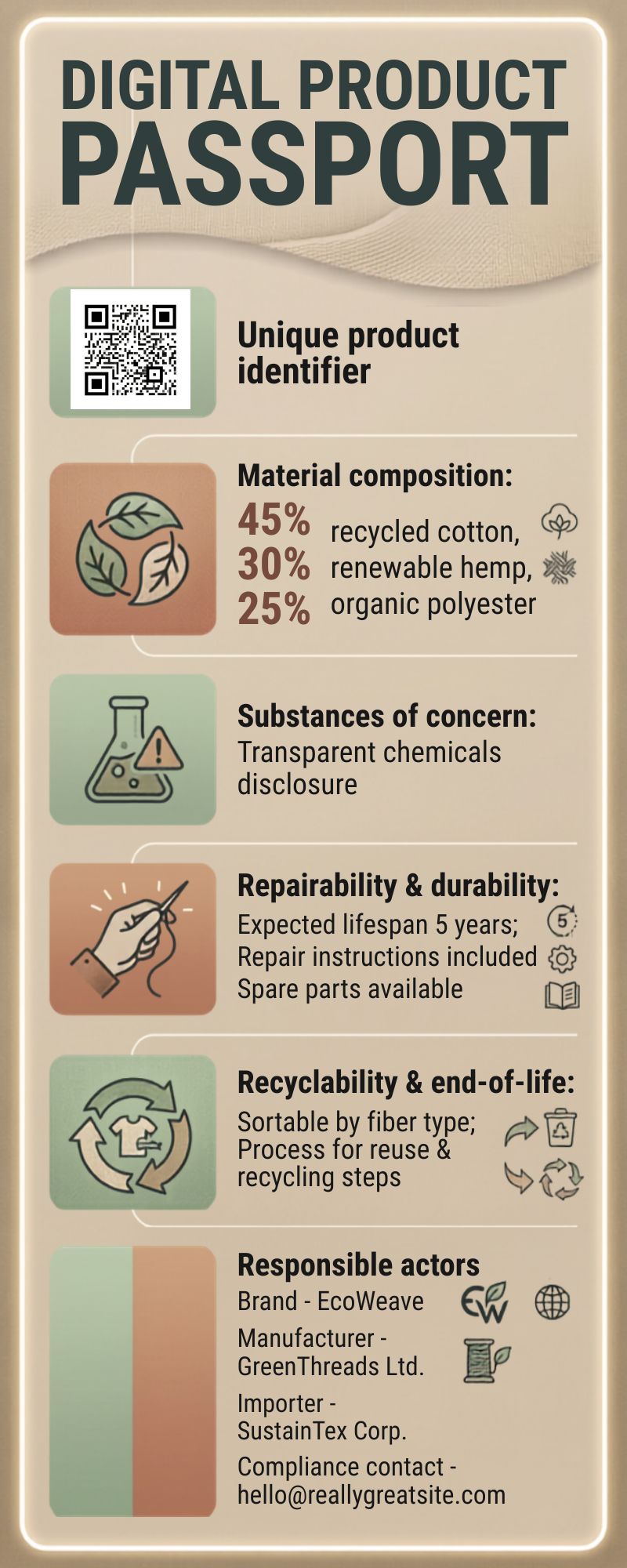
The Digital Product Passport (DPP) for textiles it’s a digital register containing information on the entire product lifecycle. The infographic shows an example of information that can appear once scanned a QR code on the product label.

Key benefits of the DPP:

  •       Enhanced supply chain transparency
  •       Improved consumer trust
  •       Sustainable product tracking


Self-Assessment Quiz

Instructions:

Read each question and choose the answer that best matches what you know (take note on a piece of paper). At the end, calculate your score and discover your DPP knowledge level!
Find out more about the Digital Product Passport for textiles:

EU Textile Repairability Rules: What You Need to Know

Digital Product Passports are coming to fashion

EU Digital Product Passport reshapes fashion design through transparency, traceability and digital twins, redefining sustainable value´

Self-Reflection

  1. After learning about the DPP, do you think it can help people make more sustainable choices?
  2.  If every piece of clothing had a Digital Product Passport, how do you think it would change the way people shop?
  3. What is one new thing you learned about how clothes are made or how the Digital Product Passport works?
  4. If you could scan a Digital Product Passport before buying a garment, what information would be most important to you and why?
  5. How might the information in a Digital Product Passport influence your future shopping, repair, reuse, or recycling decisions?

TOOL 2: Redesign it to make it “better”

Multimedia resource & interactive activity

Useful readings

Stitchery: YouTube channel about upcycle, redesign, repair and embroidery styles

Basic Hand Stitches for Beginners:

Self-Reflection

After watching and trying the T-shirt redesign technique:

  1. What did I learn about creativity from transforming an old T-shirt into something new?
    • Think about how small changes can completely change the look and purpose of an item.
  2. What challenges did I face while hand stitching, and how did I overcome them?
    • Reflect on any mistakes, frustrations, or problem-solving strategies you used during the project.
  3. How did planning and patience affect the quality of my finished design?
    • Consider whether measuring, marking, and sewing carefully improved the final result.
  4. What does this project teach me about sustainable fashion and reducing waste?
    • Think about how upcycling clothing can help the environment and encourage more mindful consumption.
  5. If I redesigned another piece of clothing, what would I do differently or improve next time?
    • Identify one new skill, design idea, or technique you would like to try in a future project.

TOOL 3: Upcycling + craftsmanship

Multimedia resource & interactive activity

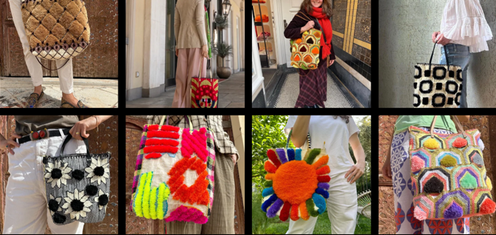
The Food Bag Foundation Project was born from an encounter between Morocco and England. They transform used plastic bags into durable bags that are hand-embroidered by local artisan women. Each piece is unique and produced only to order to reduce waste. It is a project that combines upcycling, craftsmanship and social impact.

Explore the Food Bag Foundation website to know more about it!
Useful readings

Food Bag Foundation webpage

Food Bag Foundation social media

CALLA Paris upcycling initiative

Self-reflection questions:

  1. Has this activity changed the way you think about waste materials such as plastic bags, old clothes, or packaging? If yes, how?
  2. Would you be interested in buying or using a product made from recycled or upcycled materials? Why or why not?
  3. How do you think projects like the Food Bag Foundation can help create opportunities for women, artisans, and local communities?
  4. What new idea did you discover about how creativity can help solve environmental problems?
  5. What is one action you could take in your daily life to reduce textile waste or give old items a second life?

Co-funded by the European Union. Views and opinions expressed are however those of the author(s) only and do not necessarily reflect those of the European Union or the European Education and Culture Executive Agency (EACEA). Neither the European Union nor EACEA can be held responsible for them.

Project Number: 2024-1-DE02-KA220-ADU-000257214